Calling young queer people aged 18 – 25 living in and around Hull!
The Queer Mycology Lab new, hands-on creative ecology project exploring fungi as powerful guides for connection, transformation, and queer ways of being through curiosity, respect, and shared discovery.
Over seven half-day sessions (consisting of an introduction session and six practical workshops), up to 8 participants will get to know fungi as living beings with their own roles, needs, and ways of relating to the world. A co-created programme of activity could include mushroom foraging walks, creative making workshops, cultivation sessions and group conversations. Together, we’ll create space for a dialogue between human understandings and fungal worlds – a chance to learn with fungi rather than from them.
This information page offers details about the project and how to sign up.
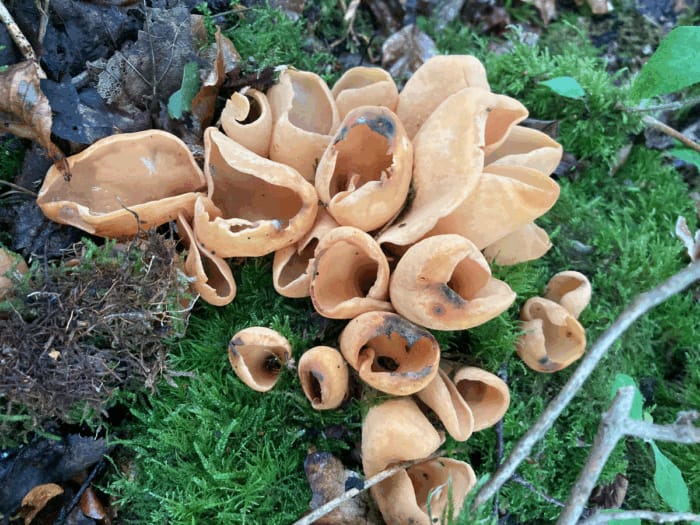
bleach cup fungus, photo: Elspeth Mitchell. Used under creative commons licence CC BY
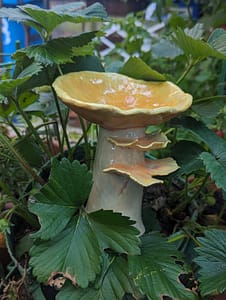
Ceramic Sculpture by Lauren Saunders
Why fungi?
Fungi are everywhere, yet often overlooked. They build soil, nurture plants, weave underground networks, and recycle life back into the ecosystem. Their lives are full of transformation, cooperation, and surprising diversity.
In the Queer Mycology Lab, we approach fungi with appreciation and care. We ask: what do fungi need, how do they live, and how can we respect the worlds they sustain? And in return, we reflect on how their ways of being might open up new perspectives for us – around identity, community, and how we share space with other forms of life.
It’s a co-creative knowledge exchange: a gentle back-and-forth between ecological understanding and human imagination.
Why queer?
Fungi don’t follow neat categories. They grow in networks, shift form, build relationships, break down the old, and nourish the new. Many mycologists describe their field as a queer discipline because fungal life challenges rigid ideas about identity, bodies, and connection. But it isn’t just about non-binary biology. It’s also about how their lives experiences many queer people recognise. Fungi thrive through connection: forming supportive networks, sharing resources, and building relationships that don’t follow traditional family structures. This mirrors the way many queer communities create chosen families, care networks, and bonds that sustain us when traditional structures haven’t always been welcoming.
Fungi also flourish in places others overlook – the understory, the shadows, the edges – turning overlooked spaces into vibrant sites of growth. Queerness has long involved finding or creating life, joy, and culture in places where mainstream society didn’t expect it. And their constant transformation – breaking things down, reshaping environments, and regenerating new life – resonates with the resilience and reinvention woven through LGBTQIA+ history: surviving, adapting, and making space for ourselves and others.
So the connection isn’t that fungi “represent” sexuality or gender, but that their ways of living – networked, resilient, transformative, interdependent, thriving in unexpected places – resonate deeply with many queer lived experiences. The Queer Mycology Lab uses these ideas to help us think about ourselves, our communities, and the environment in creative new ways.
And aside from the lead artist also identifying as queer… why on earth should we not have a queer mushroom project!?
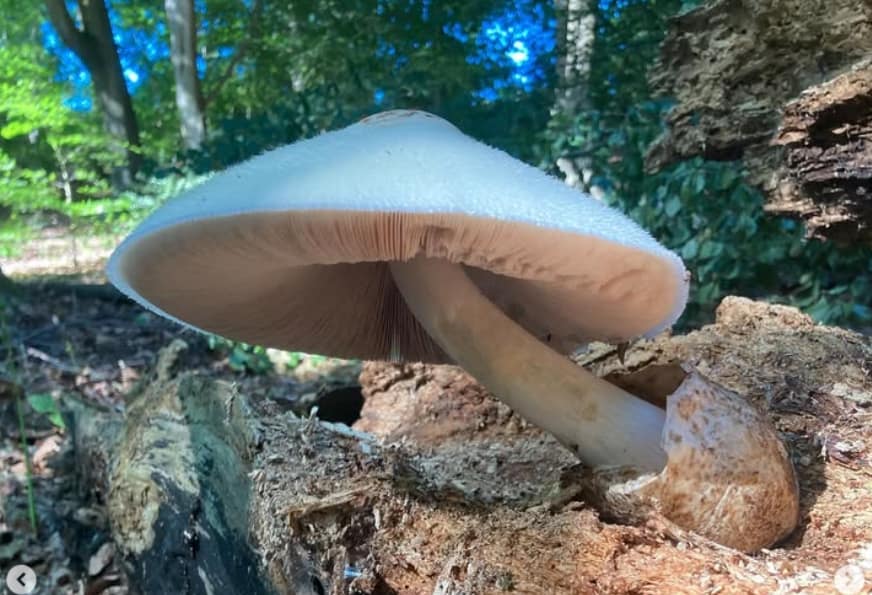
One of Elspeth’s best finds: Volvariella bombycina / Silky Rosegill – literally glowing like an orb in the woods.
What you’ll do
We will first come together on Wednesday 15 April 2026 at Thwaite Botanical Gardens (Cottingham) to introduce ourselves to one another and – led by participant interests, skills and knowledge – co-create a plan of what we could share and explore together over the following six sessions (22 April – 27 May). We could:
-
Go fungi foraging to observe species in their own habitats, learn respectful and sustainable identification, and understand their ecological roles.
-
Understand mushroom cultivation and learn how to grow fungi while considering their needs, environments, and lifecycles.
-
Get creative in hands-on workshops through drawing, sculpture, printmaking, sound, performance zines, and other forms of making (including interspecies collaboration) – to express and celebrate what we notice, feel, and understand in dialogue with the fungal world.
-
Have interesting and meaningful discussions linking fungal ecologies with questions about culture, connection, coexistence, identity, kinship, and responsibility to help build tools for thinking about social and ecological justice in new interconnected ways.
- Support our participants in sharing their own knowledge, skills, and ideas with the group
Showcasing opportunity after the workshops: We also have the opportunity to share our artworks, ideas, developed pieces and findings in late June at the Pier Street Pop-Up Space. We can use the space how we want (within reason) – we could use it to launch a printed zine, put on a small exhibition or performance event… or something else entirely! We’ll decide on this together during the workshops.
Who can take part?
- Young people aged 18-25 who identify as queer (gay, lesbian, bi, asexual, questioning, trans, gender-non confirming, or anything else in between.)
-
Living in or around Hull
-
No experience or prior knowledge required – thinkers, explorers and makers of all levels welcome
- Those able to commit to all seven sessions, and support set up, invidulation and take down of the group showcase (install 24 – 25 June, showcase weekend 26 – 28 June, deinstall and tidy 29 June – 1 July.)
Who is involved?
Funded by the Sapling Fund, this project is being delivered between local Hull artist Lauren Saunders, and mycologist-and-lecturer Dr Elspeth Mitchell from the University of Leeds. The Queer Mycology Lab is part of a research project called ‘Roots and Spores’ between Lauren and Elspeth, as they explore collaborative, creative and impactful partnership working.
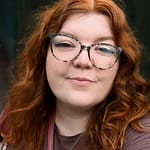 Lauren is a Hull-based, disabled, neurodivergent and queer visual and participatory artist who works collaboratively with people and place to tell human and more-than-human stories about nature and the climate crisis. Her work aims to decolonise human relationships with the more-than-human world, and explore how creative climate hope can support in the development of equitable nature connection, ecoliteracy, place-based stewardship and radical kinship towards the natural world. She works across a diverse range of materials and inclusive practices, with various communities, and through a range of intersectional lenses. She is also the Co-Director of The Critical Fish, Arts Lead for Hull & East Riding Friends of the Earth and an aspiring musical theatre/cabaret performer! You can learn much more about Lauren by exploring her website and following her via @LSaundersArt (on Instagram / Facebook)
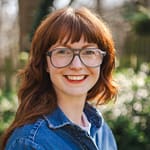 Elspeth is a lecturer in feminism and visual culture at the University of Leeds. She explores how art, ecology and everyday life intersect, especially through feminist, queer and anti-racist perspectives. Her research brings together ideas from cultural studies, art history, film, gender studies and environmental humanities. A lot of her recent work focuses on fungi and the many ways they help us rethink connection, care and the environments we share. She is also part of the Mid-Yorkshire Fungus Group, where she helps record and share local fungi as a member of the committee. You can find out more about Elspeth and her work on her website.
Practical details
-
Taking place weekly on Wednesdays, between 1pm-4pm.
-
One co-planning day on Wednesday 15 April 2026.
-
Six three-hour sessions on Wednesdays 22 April to 27 May.
- Our base for activities will be at Thwaite Botanical Gardens, Cottingham HU16 4RQ across indoor and outdoor spaces.
-
Opportunity to exhibit work, perform or otherwise share what we do locally in the Pier St Pop-Up Space on the weekend of 26 – 28 June. We have a few days either side to curate the show and take it all down after (24 June – 1 July inclusive).
-
Free to participate, but you must register.
- Participation is first-come-first-served, and there is likely to be a waiting list. Applicants will be told that they have a place or are on the waiting list around mid-March.
-
Materials, equipment, and some refreshments will be provided.
- You will be required to complete and sign some short forms at the planning sesshion as part of the conditions of this research project. You can read through these Participant Information Form and Consent Form ahead of time by clicking the links, and you can ask any questions about what they say when we meet.
- More questions? Email hello@laurensaundersart.co.uk or E.R.Mitchell@leeds.ac.uk
How accessible is this opportunity?
-
The Queer Mycology Lab is a relaxed and informal participatory project that will involve lots of conversation and collaboration, and be directed by the interests of those present.
- Participants won’t be asked to do anything they’re uncomfortable with and there’s no expectations to produce lots of artwork or writing.
- There will be plenty of opportunity to take a break, stretch your legs or go for a quiet wander in the grounds if you need to do so.
-
The venue is step-free and has a gender neutral disabled toilet.
-
Free to participate, and a public transport bursary available for those who need it.
- Personal Assistants / Supporters / Carers are very welcome to come along and get involved, and we encourage participants to utilise any existing adaptive tools within the sessions. They will not be considered as being an extra place.
- Due to the semi-outdoor nature of the project, The Queer Mycology Lab does require some level of physical ability. You won’t be expected to do cartwheels, but participants will be outdoors and walk between on-site locations in potentially wet, cold and/or muddy weather, and walk around on uneven / grassy / gravel grounds.
- We have shared as much available information here as possible, so you can make an informed decision and feel as prepared as possible.
- We are committed to being as inclusive as we can throughout this project, but please bear in mind we are restricted to doing what we can within our modest accessibility budget!
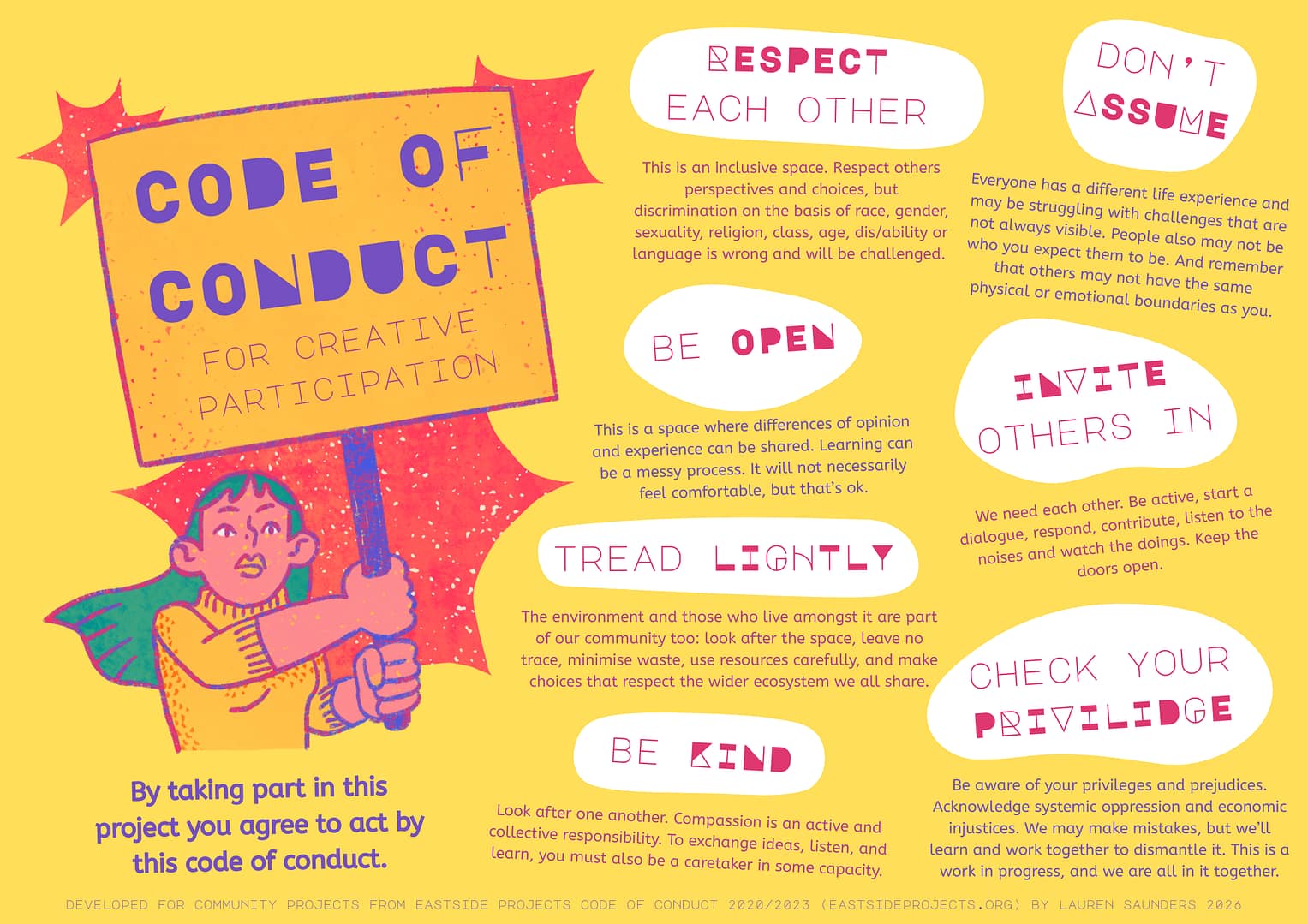
Code of Conduct
Ready to sign up?
- Spaces are limited to 8 participants so the group can stay small, connected, and supportive.
- Therefore we ask that you only sign up if you are committed to making the initial planning session, all six workshop dates and supporting the group showcase in June. This is to ensure that the limited places go to people who will get maximum benefit from them.
- Places are highly limited, so if you register and find you are no longer unavailable, please email either Lauren or Elspeth (emails above) so we can give the place to someone on the waiting list.
- By signing up the project you agree to follow a series of mutually-respective ground rules that help maintain safety, protect participants and staff, and create a creative and enjoyable atmosphere for all involved, listed above.
- You will be given Media Consent Form and Research Participation Form at the first co-planning session. We are required to have these completed in full before starting activity.
Please complete the sign-up form by clicking HERE.
Let’s explore fungi not as resources, but as knowledgeable neighbours – and see what grows when we meet them with curiosity and care.
Many thanks to project supporters, funders and friends including:
The Sapling Fund, The University of Leeds, Lauren Saunders Art, The University of Hull, Playful Green Hull, The Friends of Thwaite Gardens, and Wykeland Properties.